.jpg?type=w966)
The term 'on-device AI' is no longer unfamiliar. It often comes up when talking about AI features in iPhones or Galaxy phones, and similar expressions appear in articles about laptops or cars. However, in many cases, it’s explained only as “AI processing inside the device.”
Recent announcement on June 15, 2026
The recent announcement on June 15, 2026, about the development of domestic on-device AI semiconductors deserves a closer look. It marks the trend of AI moving inside the devices themselves. On-device AI processes user data or commands first within chips inside smartphones, cars, or appliances, rather than sending everything to the server. Tasks like understanding voice commands, identifying objects in photos, or quickly assessing the situation around a vehicle depend heavily on response speed. When internet connectivity is poor or privacy is sensitive, processing within the device naturally makes more sense.
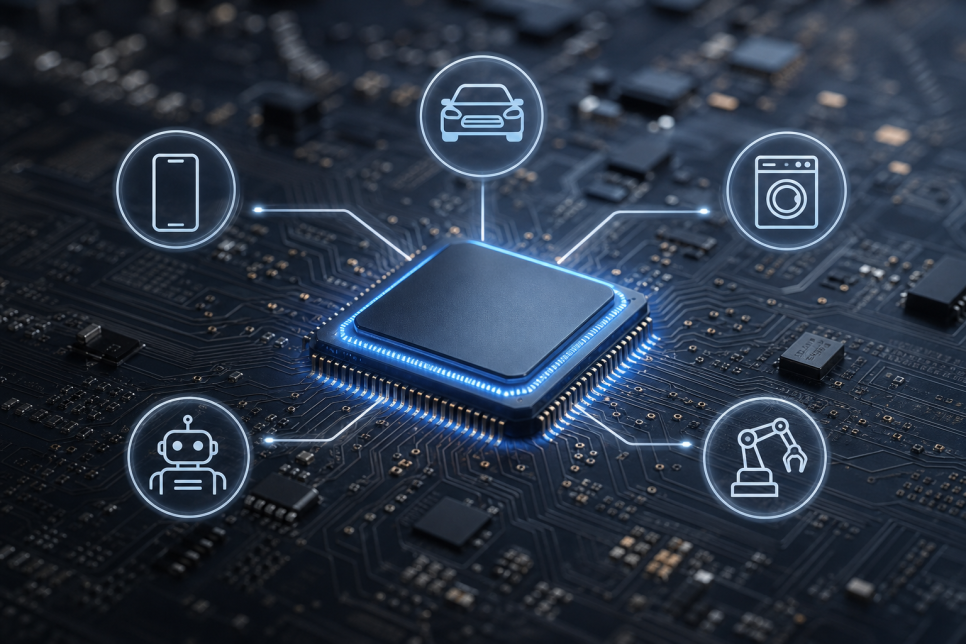
The direction revealed by the Ministry of Trade, Industry and Energy aligns with this trend. With a total budget of 800.2 billion KRW, the plan supports the development of 10 types of customized domestic on-device AI chips tailored to demand companies and aims to incorporate and validate them in actual products. While the scale looks like a major R&D project at first glance, the key point is the goal to produce chips made specifically for particular uses.

It’s not just about smartphone AI. For general users, smartphone AI often comes to mind first—features that help find photos, polish sentences, or convert speech to text are already part of daily life. But the demand for on-device AI extends far beyond smartphones. The number of devices needing instant decision-making on site—like cars, security cameras, robots, industrial equipment, and smart appliances—is continuously growing.

These products can't all use the same chip. Cars require safety and real-time decision-making, appliances need to balance power consumption and cost, and security cameras must consider both video processing and privacy protection. This creates the need for AI semiconductors designed for specific purposes, different from general-purpose AI server chips.
I often use AI tools for blogging and website work, and in that context, speed and stability matter more than expected. While a slight delay in responses might be tolerable, devices like cars or security equipment that need immediate judgments won’t wait. Therefore, on-device AI shouldn’t just be seen as a buzzword but as a discussion about where and how to deploy AI.

AI is now entering everyday life. While semiconductor topics might seem complex, their results are reflected in the products we use: faster photo analysis, smoother voice commands, and quicker car assistance features. When cloud AI handles large-scale calculations, on-device AI manages tasks that need immediate processing within the device.

Of course, on-device AI doesn’t replace cloud AI entirely. Large language models and massive data analyses still benefit from servers. However, functions used frequently, sensitive information, and tasks requiring quick responses will likely see growing on-device processing. Moving forward, we should expect both approaches to coexist and complement each other.

One more aspect to consider is updates
Even when AI runs on the device, models and software must keep improving. If manufacturers don’t support updates over time—even with capable chips—features will quickly become outdated. That’s why when choosing AI devices, it’s important to consider not only hardware specs but also update policies, support duration, and privacy information. This applies to domestic AI chip development as well. Producing the chip is just the beginning; products and software using the chip must evolve together. When Korean companies develop chips tailored for specific devices and industries and build a system to gather real-world data for improvement, users will experience meaningful changes.